


[Auto Home News] Recently, smart officially released spy shots of the test vehicle for the mass-production version of its all-new micro car, the smart #2 (domestically named Smart Elf #2). As the successor to the classic fortwo, the new model is undergoing intensive engineering tests in multiple regions around the world. The official confirmed that the vehicle will make its global debut at the Paris Motor Show, which kicks off on October 12, 2026. The exposed test vehicle adopts a customized black-and-white camouflage livery exclusively designed by Mercedes-Benz's global design team, fully disclosing full-set test progress information covering chassis, handling, NVH, body safety and other aspects.
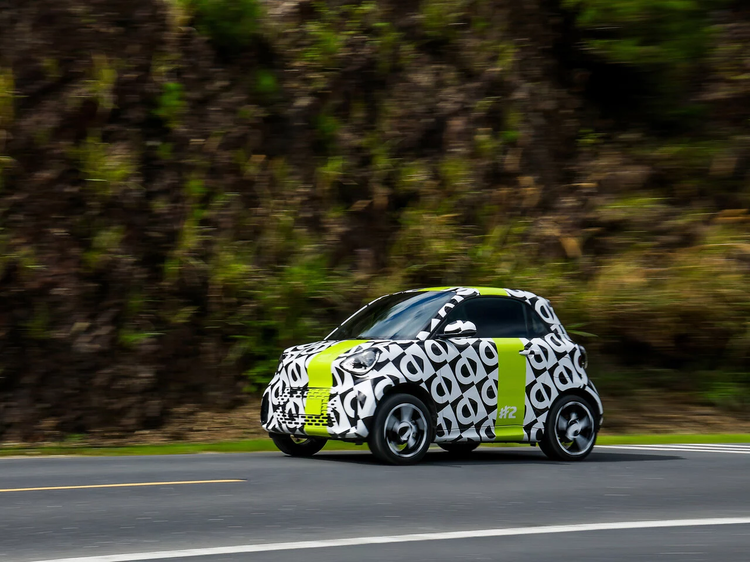
In terms of appearance, although the mass-production model is still covered with camouflage, its design profile can be roughly seen. It can be noticed that the front headlight cluster of the new vehicle adopts a triangular style similar to that of the concept car, with built-in LED light modules inside; the front bumper is designed with a large-size cooling opening, and the overall design looks more agile. According to official information, the Smart Elf #2 is built on the brand's self-developed ECA pure electric compact architecture, which is specially developed for micro pure electric two-seater vehicles, with the core goal of balancing flexible handling, interior quietness, structural safety and daily pure electric practicality within an extremely small body size.
To adapt to complex urban road conditions, the engineering team has completed multi-dimensional dynamic tuning for the chassis. The test site simulates real scenarios such as sudden urban obstacles, emergency lane changes, low-adhesion wet and slippery roads, to continuously optimize suspension mounting points, steering gear ratio, steering stroke and shock absorption control logic, so as to ensure the small vehicle delivers stable and responsive handling performance in daily commuting. Meanwhile, the new vehicle has completed a large number of durability tests, continuously passing through potholed damaged roads, continuous bumpy pavements and curb impact conditions, simulating common urban scenarios such as undercarriage scraping and speed bump crossing to verify the long-term reliability of the body and chassis; the special crash test has also been calibrated for high-frequency urban accident scenarios including curb climbing and deep pit impact.
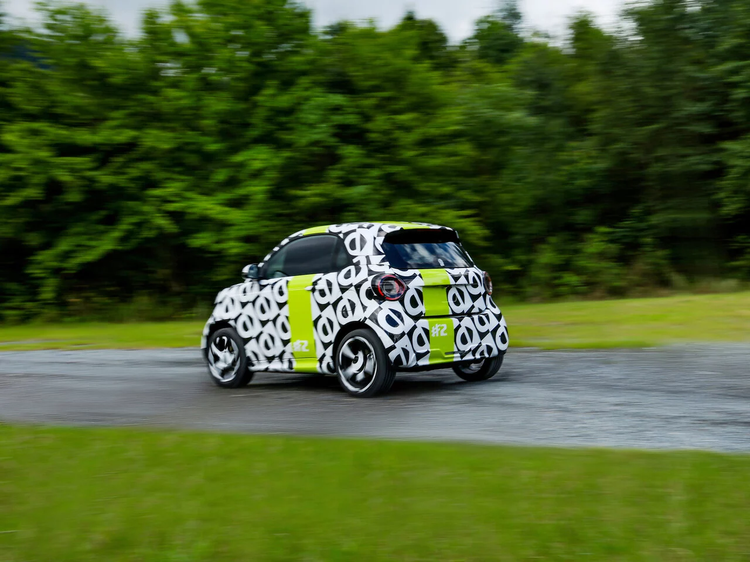
From the side view, the new vehicle also retains the classic cockpit structure of the fortwo model, with front and rear wheel arches forming a small wide-body design. At the same time, the new vehicle continues smart's iconic "four wheels at four corners" body layout, and the short front and rear overhang design maximizes interior space utilization. The overall length of the vehicle is 2.79 meters, with a turning diameter of only 6.95 meters, retaining the same class-leading urban shuttling flexibility as the old fortwo. In terms of the rear, the new vehicle's taillight cluster adopts a circular design, which is slightly different from that of the concept car. It is also equipped with a roof spoiler, and the license plate frame area is arranged in the middle of the tailgate, making the overall collocation more layered.
NVH quietness optimization is a key link of this test. The official has carried out full-scenario noise and vibration verification covering wind tunnels, acoustic laboratories, four-column temperature-controlled test benches, closed test grounds and public roads. The test items include high-speed wind noise, road noise, electric drive transmission system vibration, interior abnormal noise caused by temperature difference, and body friction abnormal noise investigation, with targeted optimization of the vehicle's acoustic texture. Engineers simultaneously test multiple tires with different formulas, and carry out repeated calibration on roads such as damaged asphalt, slotted concrete and high-speed straight roads, to balance the two demands of low rolling resistance (for improved range) and tire noise suppression, so as to solve the high-speed noise problem common in micro electric vehicles.
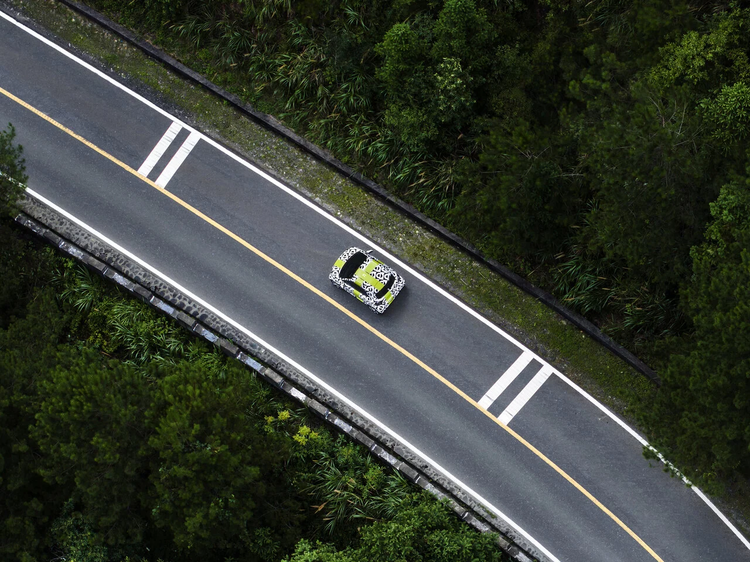
Relevant power and range parameters have been disclosed previously. The ECA platform is equipped with a 35.7kWh battery pack, with a target range of about 300km under WLTP conditions and about 400km under CLTC conditions. It supports DC fast charging, with the charging time from 10% to 80% controlled within 20 minutes. The rear-wheel drive layout also ensures flexible power response for urban mobility, getting rid of the range and energy replenishment shortcomings of traditional micro electric vehicles.
On the R&D level, the Elf #2 is jointly developed by smart's global R&D team and Mercedes-Benz design team. Its exterior and interior design retains the brand's iconic recognition, while integrating a new electrified design language. The vehicle belongs to the smart brand, a joint venture between Mercedes-Benz and Geely. Its European market operating entity is smart Europe GmbH, headquartered in Leinfelden-Echterdingen near Stuttgart, responsible for full business of sales, marketing and after-sales in the European region. (Compiled by Bi Ye / Auto Home)