


【AUTOHOME Industry】The Supervisory Board of Volkswagen Group has unanimously approved the "2030 Future Plan", under which the group will adopt a variety of measures to cut costs and enhance competitiveness. Volkswagen Group released the above information on September 3 local time in Germany.
Volkswagen Group stated that this is the largest transformation plan in the company's history, targeting an operating profit of 31 billion euros and an operating margin of 9% by 2030.
This requires substantial cost cuts. In terms of product planning, Volkswagen Group plans to streamline its total model lineup by half by 2035, and reduce the complexity of trim levels for each model by 75%. The group said that only models built with focused resources can lead the industry in design and technology, and reducing the number of different trim levels can boost per-model sales, thus cutting costs through economies of scale.
Volkswagen Group also plans to optimize production capacity and workforce size. According to the plan, the group's existing production capacity in Europe exceeds market demand by more than 500,000 units, among which four factories located in Germany are unable to continue operations. Volkswagen Group plans to work out a sustainable and competitive production layout plan before June 2027, and is evaluating alternative uses for the four German factories. Meanwhile, the group needs to cut 50,000 jobs globally, including managerial positions.
The group's organizational structure will also be adjusted accordingly. To improve decision-making efficiency, the Supervisory Board of Volkswagen Group will in the future only retain approval authority for major matters concerning the group as a whole. The group also plans to streamline its management structure, optimize management hierarchies, and strengthen the linkage between individual performance and overall business performance accountability.
Volkswagen Group will also conduct strict evaluations of its invested companies and business segments, divest or reposition non-strategic businesses, only retain assets that deliver clear strategic value and financial contributions to core businesses, and streamline its overall investment portfolio by approximately one-third. The group also plans to sort out its real estate assets, with the aim of improving capital utilization efficiency.
Both the North American and Chinese markets occupy important positions in the transformation plan. Volkswagen Group said that in North America, it will focus on the most profitable market segments; in China, it will roll out plans adapted to changes in overall market growth expectations, and expand its business of exporting from China to the "Global South" markets.
The above transformation plan has been in the works for a long time. In March 2026, when releasing its 2025 financial report, Volkswagen Group proposed that it would formulate a new plan in response to market changes. In 2025, Volkswagen Group's delivery volume and revenue posted slight year-on-year declines, but its operating profit plummeted by 53% to 8.87 billion euros, with the operating margin dropping to 2.8%. In the first half of 2026, the group's financial situation did not improve, with operating profit falling 11.6% year-on-year to 5.9 billion euros.
At the Supervisory Board meeting held in July 2026, Volkswagen Group presented the above plan, which was immediately opposed by labor union representatives and the Minister-President of Lower Saxony, where the group's headquarters is located, both of whom are members of the Volkswagen Group Supervisory Board. At the end of 2025, Volkswagen Group just approved a restructuring plan that aimed to cut 50,000 jobs. The new plan once again proposed closing factories and an additional 50,000 job cuts, triggering a backlash.
Recently, under pressure from the labor union, Volkswagen Group's management held a series of employee meetings to explain the necessity and urgency of these adjustments to employees in person. After nearly two months of negotiations, Volkswagen Group's transformation plan was finally approved.
Oliver Blume, CEO of Volkswagen Group, said that the group shoulders responsibility for all employees, partners and industrial jobs worldwide. In the coming years, the group will invest hundreds of billions of euros to make its iconic brands more attractive and competitive in the market.
Labor union representatives expressed their support for the plan. Christiane Benner, Vice Chair of the Volkswagen Group Supervisory Board and First Chair of IG Metall, said that the management now has the foundation to complete the major transformation task, and the plan also includes provisions for formulating future development plans for all factories. As Germany's largest industrial enterprise, Volkswagen Group bears significant responsibility for its employees and the regions where it operates.
Olaf Lies, Minister-President of Lower Saxony, also reversed his stance. He said that in the face of international competition, Volkswagen and the German automotive industry are facing enormous challenges, and it is particularly important for all parties to work together to advance the necessary transformation. The Supervisory Board's resolution sends an important signal that Volkswagen will invest heavily to secure its future viability.
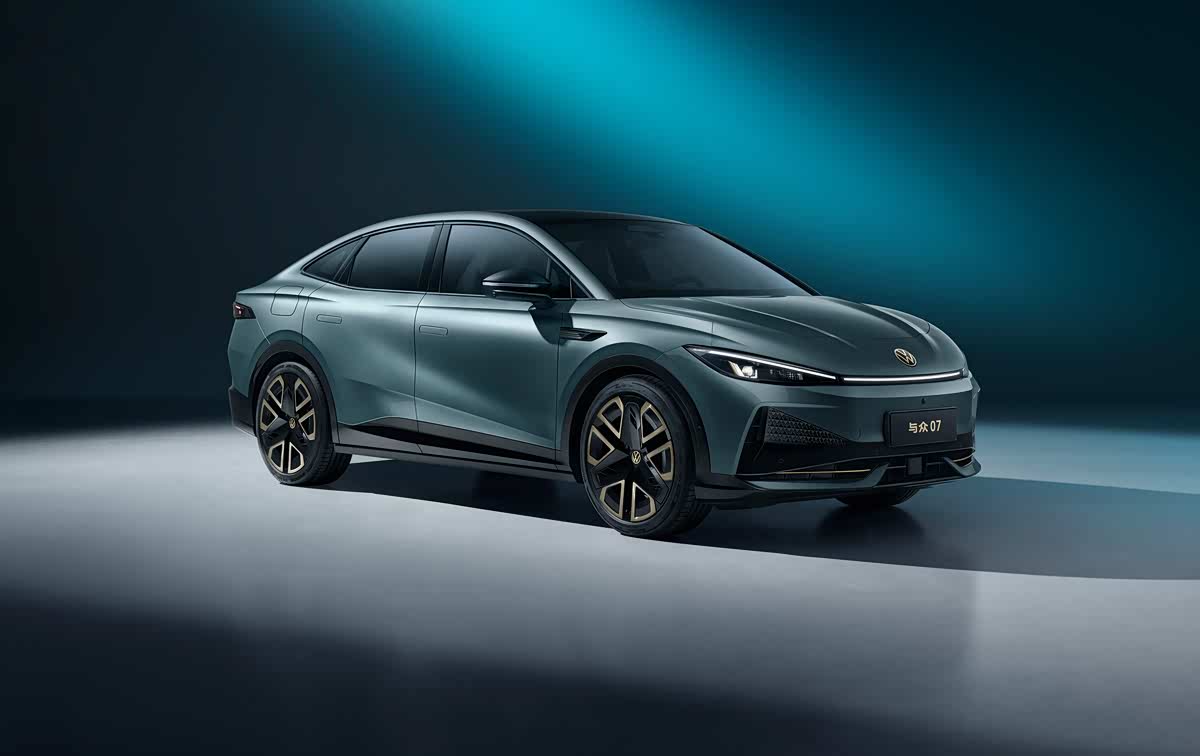
Olaf Lies also emphasized that with increasingly fierce global competition, Germany needs to establish a competitive institutional framework and trade policies that can consolidate its domestic industrial base.
In the past, Germany generally opposed trade protection policies proposed by the European Union, but in the face of the increasingly severe reality, a new consensus is emerging among Germany's political and business circles.
Germany's *Der Spiegel* recently published a cover story on the impact of Chinese cars, titled "The Most Dangerous Moment for the German Automotive Industry: When Chinese Cars Start Being Made in Europe", with an image of a red car featuring the Chinese characters "Chong a" (Charge) in the license plate position.
The report cited internal Volkswagen Group data, stating that the average factory cost of producing a car at Volkswagen, Audi or Porsche factories in Germany is close to 6,500 euros. Volkswagen's internal estimate shows that in the future, BYD will produce a car at its Hungarian factory at a cost of only 2,000 to 2,400 euros.
The report raised the question: After a Chinese automaker invests and produces directly in the EU and gradually builds a European supply chain, how much cost and technological advantage will the German automotive industry still have left?
Wang Han, director of the Europe-China Automotive Industry Association, works in the German automotive industry. She believes that Volkswagen's "2030 Future Plan" is not an ordinary cost-cutting plan, but a systematic correction of its past global business model.
In the past, Volkswagen relied on its huge product portfolio, shared platforms and global scale to dilute costs. Today, as technology routes and demands in different markets become increasingly differentiated, Volkswagen's traditional model no longer matches the requirements of the times. After halving its model lineup in the future, configuration complexity will be significantly reduced, which means Volkswagen is shifting from "large and comprehensive" to "fewer and better". The past model of "German headquarters defining the global market" will also further shift to regional division of labor, and Volkswagen will make more use of different markets, especially China's most competitive technologies, supply chains and R&D capabilities, to adjust itself.
Wang Han pointed out that the deeper change behind Volkswagen's new plan is organizational transformation. Volkswagen's real problem is that a large amount of resources are locked in its old product, production capacity, organizational and technological systems, and cannot be converted into new value quickly enough. Volkswagen's reforms in the past few years have mostly focused on cutting costs for the old system, while the "2030 Future Plan" has begun to touch the old system itself. The rapid iteration capability demonstrated by China in recent years has also made European automakers such as Volkswagen realize that competition in the automotive industry is further extending from product capability to organizational capability.
Regarding the change in Germany's attitude towards China's automotive industry, Wang Han believes that German enterprises have become more pragmatic and have begun to rethink how to truly protect local industries. At this time, Chinese enterprises should not continue to emphasize "our technology is better and cheaper", but should consider combining their own advantages in technology, speed and cost with Germany's existing industrial assets and local capabilities, which will in turn create greater space for future cooperation between the two sides.